


Isbar – The Cool Layer from the North
Developed in Sweden by a Catholic monk named Martin Silverudd in the mid-20th century, the Isbar is one of those rare breeds that combines good looks, great productivity, and eggs in shades of green that’ll make your basket look like it raided the mint section of a paint catalog.
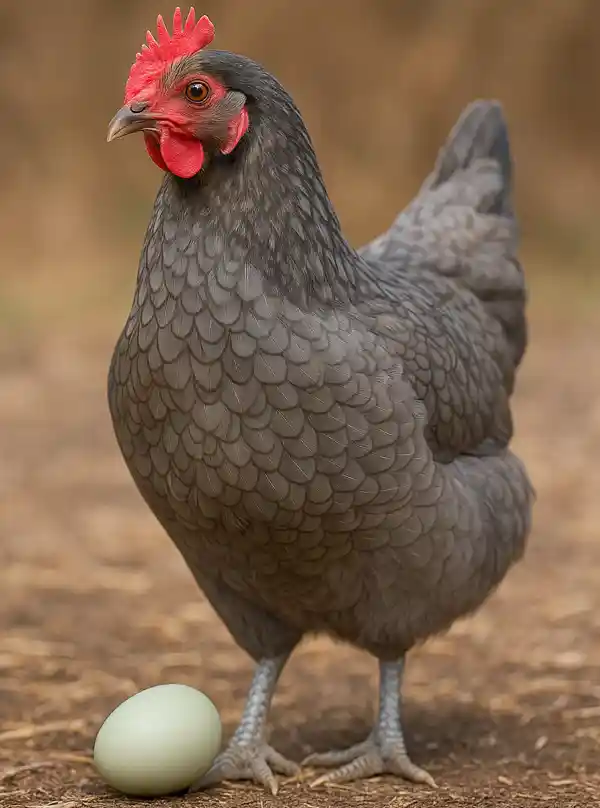
Pronounced "Ice-bar," the Isbar was designed to be a practical, productive chicken that could handle the chilly Scandinavian climate while producing a respectable number of colorful eggs. Mission: accomplished. These birds lay around 180–200 eggs a year, and the shells come in varying shades of mossy green to mint, sometimes with speckles that look like nature took up egg painting as a hobby.
The Isbar is a true breed, not a hybrid or marketing invention like some "designer eggers." That means you can breed them and get consistent offspring. Most common in Blue, Black, and Splash feather colors, Isbars are downright beautiful — with soft, flowing plumage, a graceful profile, and a confidence that makes them look like they belong in a Scandinavian furniture catalog.
Temperament-wise, they’re friendly, active, and inquisitive — the kind of birds that follow you around hoping you’ve dropped something delicious. They handle cold weather very well, and while they’re not lap chickens, they’re happy to hang out nearby and make the coop look classy.
Isbar at a Glance
Size: Medium (Hens: ~5.5 lbs, Roosters: ~6.5 lbs)
Egg Production: 180–200 per year
Egg Color: Green (mint to mossy, often speckled)
Temperament: Friendly, active, curious
Cold Hardy: Excellent
Heat Tolerant: Good
Good for Beginners: Yes
Feather Color: Blue, Black, Splash
Broody Tendency: Occasionally
Life Expectancy: 6–8 years
Bonus Feature: Sweden’s green gift to your egg basket
The Isbar brings substance and style to any flock. If you're looking for a dependable layer with unique eggs, a gentle disposition, and a backstory involving a monk on a mission, the Isbar’s got your name on it — spelled out in green.
